Pointing out the obvious – bye for now
I haven’t posted since October. For a variety of reasons, mostly having to do with writing screenplays, I don’t see that level of activity changing soon. So I’m mothballing the blog.
And I’m okay with that. This was fun, and it may be fun again, but right now it’s not much more than a source of occasional guilt. Rest assured, I’m writing, or revising, or tracking contest results, or flying off to film festivals to mingle and learn.
Thanks for stopping by, and whatever creative thing it is that paddles your canoe, keep at it.
Jeff
That magical moment

Pretty sure one of these is New Adult Urban Fantasy Slipstream Fabulism.
When you finish a screenplay and you realize you have no idea in hell what genre it is.
Could be worse. In publishing it makes your life much harder (unless you’re established). In filmland it just means you can enter it in more competitions. It’s horror! It’s comedy! It’s fantasy! It’s a floor wax and a dessert topping!
Dumpster fire diving

Just a quick and sobering thought that has been making my brain hurt: for a writer, the Trump campaign demonstrates a basic truth about storytelling.
The more you engage someone emotionally, the less they will care about details like logical consistency or empirical evidence.
This truth is why religion, fiction and confidence games work, though I will refrain from commenting on the degree of overlap between them, or how this makes me in any way like Paul Ryan.
It’s also why most people will forgive lapses of logic in a movie easier than they will a novel. The visual is visceral, if done right. That, and fridge logic has more time to creep in when you’re reading.
Vacation!
I was taking one the last week of May and the first two weeks of June. It was by turns epic, lovely, frustrating (one day soon, Edinburgh. One day soon…) and then pretty much epic again. Some places required cineramicpanomascope treatments:

Cool, epic place

Epic, cool place

Place of epic coolness and fast moving son.

Stone age cool.

Steampunk cool.

Cathedral cool.

1960s Surreal cool.
I got to meet some cool people IRL, reconnect with old friends, learn fascinating things and drive a right-hand RV with a stick. I even got to write, not just on the flight there and back again, but while eating breakfast overlooking Loch Ness (if you must write a synopsis of an unfinished work in a hurry, there are worse places to do so).
What I didn’t do was blog. And then I got back and got busy writing and not blogging, until a combination of guilt and dental pain (do crowns know it’s a holiday weekend? I bet they do, the bastards) brought me here to play catch up.
Which I have now done. Now to run tests on which single malt performs best as a topical anesthetic…
At some point…
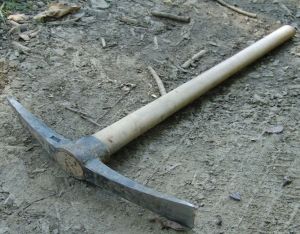
Yeah, this is what you get when you Google images for “pick name.” Thanks, Obama.
…I need to pick a better name for this supporting character than “Dr. Frenchname.”
Which touches on what’s actually a serious issue for the creative process: when does a decision become a distraction…and are all distractions bad things? I’m thinking of similar tangents in past projects, and at what point I realized the decision had tendrils that ran deeper into the rest of the plot or theme or whatever than I thought at first.
The only criterion I think works for me is annoyance level: if I really, really feel like I need to decide on a detail before I write any more, I do, whether I’m doing true pantsing or sketching out the story or (heavens forfend) outlining. Otherwise NOT dealing the distraction becomes a distraction in itself.
So far I don’t feel that way about this one, but then, the character hasn’t actually appeared yet. It will be interesting to see whether I start getting the itch to name him when he starts interacting with the protagonist et al.
My unconscious kicks serious butt
![By Created by Uwe Kils (iceberg) and User:Wiska Bodo (sky). [GFDL (http://www.gnu.org/copyleft/fdl.html) or CC-BY-SA-3.0 (http://creativecommons.org/licenses/by-sa/3.0/)], via Wikimedia Commons](https://upload.wikimedia.org/wikipedia/commons/a/ac/Iceberg.jpg)
My unconscious may also present a hazard to shipping during the winter months.
a) my agent reading my middle-grade novel
b) the screenplay version of that novel entered in a number of contests, after winning or being a finalist in a dozen or so.
c) another screenplay entered in more contests
d) a TV pilot entered in a contest
e) a screenplay ready to go to a mentor I’ll be working with for six months
f) other projects in other places
So it’s not like I’m slacking off. Except I have been feeling like I am, in fact, slacking off, because all of the above are versions of existing work, anywhere from a year to five years old, that I either rewrote, repackaged, or otherwise reconstrued.
I didn’t have a new idea in the works, and that bothered me.
It evidently bothered me a lot, because right before I woke up this morning I had a Grade-A cinematic nightmare. We’re talking full-fledged horror plot with five ironic reversals, four well-defined characters, three supremely creepy visuals, two zombie French Hens and a partridge being eaten by a combination pear tree and Venus Flytrap.
Okay, I made the last two up. But still. I recall enough to outline it. I could probably write a half-dozen scenes from it right now.
So, fellow writers and other creative types, if you ever feel like you’re running on empty, eat something vile, or turn the heat up a little too high, or do whatever it takes to make your brain go apeshit in REM. What’s the worst that can happen?*
*–Note: the author assumes no liability for nor implies any warranty against something much worse happening.
Screw you, stoichiometry
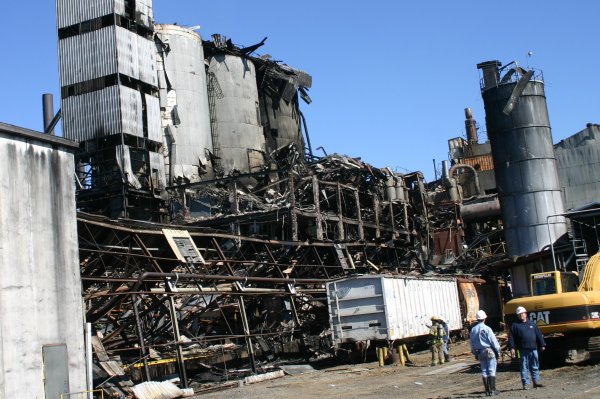 I really, really wanted a grain elevator explosion in the screenplay. But it’s hard to justify when a crucial plot point revolves around the atmosphere having about two percent oxygen.
Hmm.
*writes in superfluous liquid oxygen tanks at grain elevator*
Much better.

In other news: for all its travails and rage-inducing injustice, a world where This Is Spinal Tap has 8 out of 11 stars at IMDB can’t be all bad.
When the theme from “Mannix” is stuck in your head
It’s hard to concentrate. That is all.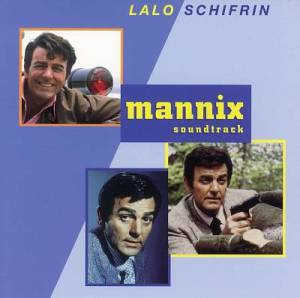
Free One Teen Story
Before you go thinking it’s trapped in jail after protesting at a Trump rally somewhere, this is me having a little fun courtesy of the good people at One Teen Story, who shipped me a box with numerous copies of my issue.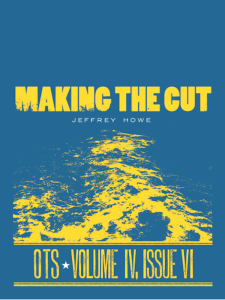
If you’re thinking about subscribing to the magazine but want to see what the paper version looks like, here’s your chance for a free preview. The first ten people to post comments here–okay, comments that aren’t spammy or casting shade on my parents’ marital status–each get one.
Note–I will need a mailing address in order to send yours, but don’t include that in your comment. We can do that via email. Also, I won’t sell or give your mail (or email) address to any loopy conspiracy theory mailing lists or direct marketers. Or anyone. Promise.
We have liftoff
Slick.
My story “Making the Cut” is this month’s issue of One Teen Story. I like the way they leverage the online aspects of their publication (though I’m also looking forward to seeing the print version): there’s a video at YouTube, a “teaser” page, an interview with me at their blog , and the cover and my interview are featured on their Facebook and Twitter pages.
Whew! Got tired just linking all that.
Anyway, for a mere $1.50 a month you can subscribe and get a longish short story every month–so at the end of a year your $18 will have purchased you two fine short story collections, one in paper form and one you can cart around on a phone or tablet. A fine gift for that hard-to-buy-for high school student on your list (at least it was for three on MY list…).
In other news, the “Robo4ce” screenplay won the Gold award from the Beverly Hills Screenplay Contest (Family division), and in what should really stop being surprising anytime now, won Best Feature Screenplay at the SoCal Film Festival. I was fortunate to be able to attend the last, and after a number of conversations with other screenwriters and the staff–all wonderful people–things came into sharper focus for me.
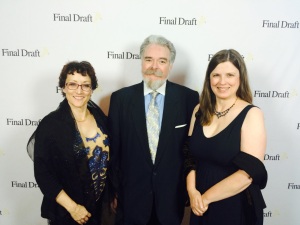
Here we see the St. Louisan using protective coloration to blend in with industry professionals
I also had a blast at the Final Draft Awards, held at Paramount Studios. I got to hover over Robert Bloch’s typewriter, gaze longingly at some Billy Wilder scripts, and chat with yet more writers (waves at Diane Musselman of Dancing Forward Productions who has at least two films under her belt, and Victoria Murad of Lilla Cardea Productions, who just wrote and produced a short: Esmeralda and the Audition).
So, yeah, February has been very, very good to me. Busy, but good. More busy goodness to come.


 Merciless Idioms